It's not that actors no longer give good performances in horror films (they still do), and it's not as if direction, editing, and special effects weren't important in the classic horror film era. But in most modern horrors, concept is more important than cast. Horror has become a director's genre more than an actor's genre. During the classic era, the genre's biggest stars were Boris Karloff, Bela Lugosi, Vincent Price and Peter Cushing. In the years since, its brightest luminaries have been Mario Bava, George Romero, Wes Craven and M. Night Shyamalan. (Mark Clark in Smirk Sneer and Scream)
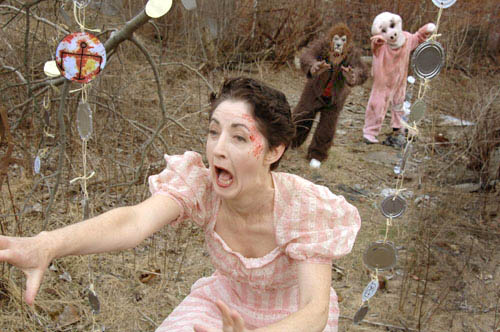
Director Justin Channell's company acronym, IWC Films, seen on his Heretic Film's distributed Die and Let Live zombies and pizza flick, sum's up the current state of horror cinema rather well: IWC stands for Idiots With Cameras. While I admire his light touch of humor, I fear the ring of truth in those three letters is precisely why horror cinema is mostly relegated to backhanded reviews or begrudging nods of minor acceptance. Making the situation worse, it's not just the idiots holding cameras, but also the ones pretending to act in front of them. Then you have the ones writing incomplete scripts without a hint of drama, pathos or depth, and others directing with those scripts, with nil basic training, because the digital age makes it appear so gosh darn easy to do--and Aunt Edna and Uncle Joey are available Tuesday for free.
Before the digital age gave any idiot with a camera the potential to become another Hitchcock or Romero, but not the sense to learn first, shoot later, horror movies more often than not had drama, pathos, and good acting that was sometimes even great. Even though many of these films were made for a quick buck, too, actors still acted, and writers wrote complete--if not always stellar-- scripts. Directors learned their technique and approached their films seriously. Even if the script was underwhelming and the direction uninspired, you could still count on yesterday's classic horror actor to give it his (or her) stylistic all. It may not have been naturalistic acting, but it was acting that convincingly and realistically entertained. Mark Clark, in his Smirk, Sneer and Scream: Great Acting in Horror Cinema, reminds us of this golden age.
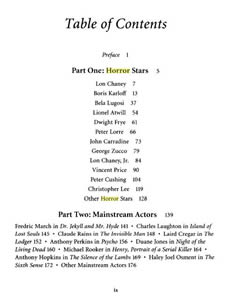
If your looking for detailed plot synopses, look elsewhere: Clark focuses only on the memorable performances that show each actor's ability to bring the house down. And while his predilection for classic horror actors fills part one, the other two parts of his book examine mainstream actors--those thespians briefly caressing the horror genre to leave their permanent scars--and the often neglected leading ladies of fright. From Boris Karloff to Anthony Perkins, and Bette Davis to Jodie Foster, Clark lists the roles that bewitched us into becoming horror fans in the first place.
After reading his fascinating book, I invited Mark Clark to step into the closet and talk about Smirk, Sneer and Scream...
 Tell us about your background and how you came to write Smirk, Sneer and Scream?
I loved the classic monster movies as a kid, and even imagined someday writing a book about them after reading (and re-reading) Edward Edelson’s Weekly Reader type book, GREAT MONSTERS OF THE MOVIES. After college, I worked as a newspaper reporter and film critic for about 10 years. I eventually left that line of work because I wanted to write what I wanted to write, instead of having to write about whatever I was assigned to cover. Toward the end of my newspaper career, I discovered Tom Weaver and the Brunas brothers’ UNIVERSAL HORRORS, which brought back for me the idea of writing about horror movies. I also began writing articles and reviews for magazines like MONSTERS FROM THE VAULT, MIDNIGHT MARQUEE, SCARLET STREET and FILMFAX and launched my online DVD review column.
Why write about acting in horror films? I mean, it's generally assumed that horror actors are not good actors, right?
Well, I wanted to write a book about horror films, but didn’t want to write a simple history. That had been done to death. I wanted an original angle, and it occurred to me that nobody had ever provided a real appreciation for the great acting performances that had been given in horror films over the years. Horror actors are usually treated like second-class citizens by critics and Academy Award voters, but that’s pure snobbery. Many fine actors worked in the horror genre, and did superb work there. I think Boris Karloff’s work in FRANKENSTEIN or THE BODY SNATCHER, for instance, stacks up with the best screen acting by anybody in any picture.
Also, I wanted to turn the spotlight back on the actors a bit. Even those people who write seriously about horror films these days tend toward narratives where the major players are directors. This is, I think, largely due to the influence of the “autuerist” film theory which emerged in the 1950s and quickly became dominant in critical thought. Personally, I believe that auteurism can be limiting, especially when oversimplified. Sure, directors are important, but film remains a collaborative art. And, as I note in my book, back in the 1930s, nobody went to see a movie based on the name James Whale or Tod Browning. They went based on the name Karloff or Lugosi. Actors and their work, as I see it, went a long way toward defining and shaping the genre, especially during its infancy.
Would you say the acting in classic horror films is different from today's? If so, why?
Wow, these are great, thought-provoking questions!
Thank you. I amaze myself sometimes, too.
Film acting in general is much different than it was in the 1930s, 40s and 50s. And of course it’s completely different from silent film acting. During the classic movie era, actors performed in a manner that was very stylized and distinctive. It wasn’t necessarily naturalistic, but it could be very expressive. Stars tended to develop a recognizable persona they carried from film to film, but the best actors among the big stars (Humphrey Bogart, Bette Davis, Cary Grant, for example) were able to take that persona in a lot of different directions through subtle variations. With the rise of the Stanislavsky “Method” school of acting, all that changed. Naturalism became the new ideal, and anything stylized was dismissed as “phoney” or “camp.” The best screen actors (Marlon Brando, Dustin Hoffman, Meryl Streep) seemed to vanish into their characters and became almost unrecognizable from film to film. There are a few performers today who have an approach that’s a sort of a hybrid between the classic era and the modern era – actors (like George Clooney, for instance) who have a true star persona, but are capable of submerging into character when necessary.
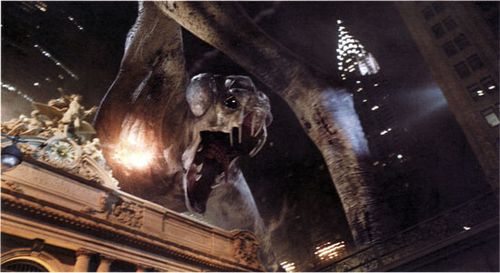
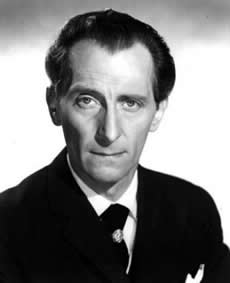 Of course, this tectonic shift in styles was felt in the horror genre, too. Plus, other changes also had a major impact. The breakup of the studio system brought the death knell for typecasting in the classical definition of the term. Studios couldn’t force an actor to make a career out of one type of character or film. Or, at least, not as easily. If actors had always been free agents, as they are today, we might never have known such a thing as a “horror star” in the first place. Nobody wants to get pigeon-holed as one type of character or too readily associated with one type of film. It’s seen as a bad career move. Left to their own devices, most if not all of the great horror stars would have abandoned the genre to stretch their muscles in different sorts of roles. In the last 20 or 25 years, the only actor who comes close to being a true horror star is Robert Englund. Now, I’ve interviewed Robert and I like him a lot. He’s very intelligent and very funny. But let’s face it, his body of work isn’t going to make anybody forget about Boris Karloff or Peter Cushing. Anyhow, the lack of horror stars has turned horror into more of a director’s genre. Although there are still good performances given in horror movies, often the acting almost seems beside the point. CLOVERFIELD, for instance, strikes me as pretty well-acted, but the film derives most of its power through technique, rather than performance. That’s common now.
You devote a chapter to the leading ladies of horror, including actors like Bette Davis, Jaime Lee Curtis, and Simone Simon. Why? Isn't horror a man's game?
Now you’re baiting me! Actually, I found writing that particular chapter more enjoyable than any other in the book. In retrospect, I think an entire book could be written on the subject of women in horror films – not a compendium of biographies like Gregory Mank’s two-volume WOMEN IN HORROR FILMS, but rather a survey of how women’s roles in horror films have reflected the changing place of women in American society over the past century. It’s a fascinating subject, which I touched on (again somewhat indirectly) in SMIRK, but which deserves further consideration and discussion. In the context of SMIRK, my primary focus was to draw attention to the many great performances by women that have graced the horror film, like those by Mia Farrow in ROSEMARY’S BABY and Sissy Spacek in CARRIE in addition to those you mentioned. There were so many great ones, it was tough to narrow it down. That was the hardest part of the entire project, actually -- keeping it from growing as big as the NYC yellow pages. There are so many great performances out there, it was impossible to cover them all. My book was intended to be a starting place for discussion, not the final word.
In our email discussions, you mentioned there were elements you were trying to weave into Smirk, Sneer and Scream you don't think fully came off. Can you elaborate on them?
Some of them I’ve already touched on, like the impact the rise of method acting and the breakup of the studio system had on horror film acting, and on the evolution of the genre itself. While writing the book, I tried to deal with these developments in a way that, looking back, was too subtle – you can get the narrative, but it’s broken up in bits and pieces in several different write-ups, rather than being stated in a clear, unified manner. I won’t be making that mistake again. In my current book, all my ideas are up front, offered in a clear, linear way. For better or for worse!
 Who's your favorite actor in classic and contemporary horror, and why?
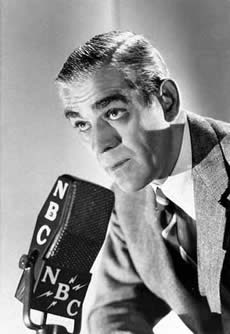
Among the classic horror performers, it’s almost impossible to go wrong with Peter Cushing or Lon Chaney Sr. I think Lionel Atwill and George Zucco are underrated. I love Bela Lugosi and Vincent Price. But my favorite is definitely Karloff. He was just such a master. At the top of his game, his performances could be tremendously subtle and moving. He could scare the hell out of you, or he could break your heart. I don’t think any other horror star has a filmography as full of varied, three-dimensional characters as Karloff, and I don’t think any other star had as significant an impact on the development of the horror film. For decades, he was the face of the genre, the same way John Wayne personified the Western. In terms of contemporary horror films, I tend to like individual performances more than particular actors.
How did you conduct your research for Smirk, Sneer and Scream?
I watched and rewatched hundreds of movies and took copious notes. Very detailed notes. Lots of rewinding, pausing, jotting things down. I tried to break down the physicality of the actor’s performance – not just the line delivery but posture, gait, gestures. What was he or she doing in the scene that really brought the character to life? How did he or she relate to the other players in the scene? How did the actor’s choices differ from or align with the performer’s work in other films? Or with the way other performers had approached similar roles? The hardest part was not getting distracted by other elements in the film, staying focused on just the acting aspect. It required a great deal of discipline and could be exhausting, frankly. Try it some time and see!
As a writer, what's your regimen to get words onto the page?
A source of ongoing pain, frankly! I tend to write in fits and starts, working very intensely for a while and then not at all for a while. This is absolutely not the way to approach writing, and I am trying to become more steady and disciplined. It’s also a big reason why I took me so long (over six years) to write SMIRK. I need to improve if I’m ever going to write all the books I want to write.
What other books can we see from your digital pen? More on horror, I hope.
I’m currently co-authoring (with Bryan Senn) a book with the working title SIXTIES SHOCKERS: HORROR FILMS OF THE 1960s. It’s going to cover, comprehensively, one of the richest, most varied and most dynamic periods in the history of the genre, a time when the classic horror era overlapped with the dawn of the modern era. I’m especially interested in writing about the way the social upheavals of the era played out in that decade’s horror films. I’m very excited about it. I hope to finish it this year and have it on the market in 2009. Again, McFarland will publish it.
Shameless plug department: By the way, if anybody else out there liked SMIRK, I urge them to check out a book called SCIENCE FICTION AMERICA. Edited by David Hogan, the book contains essays from several writers (including me) about the way social issues have been portrayed in sci-fi films over the years. All the essays are excellent. My two (about I MARRIED A MONSTER FROM OUTER SPACE and the first two ALIEN films) are the best work I have published so far. SCIENCE FICTION AMERICA is available from McFarland.
What's the one question you've been dying to be asked, if any, and what's your answer?
Q: Can I buy the film rights to SMIRK for a million bucks?
A: Yes. Just make the check payable to me.
 Zombos Says: Excellent
 Promptly taking care of Signor Pirelli's blackmail attempt, the necessity for getting rid of the foppish con man's ample frame leads to a mutually satisfying business agreement between Todd and Mrs. Lovett, and sets both on their merry way to hell in the bargain.
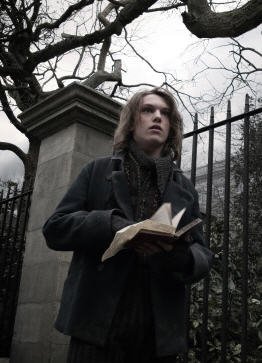
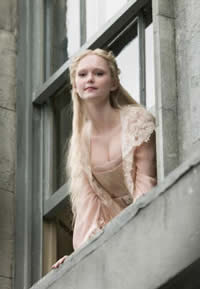 While Sweeney Todd sinks deeper into the abyss, young Anthony Hope (Jamie Campbell Bower with a bit of Goth about him), happens upon Johanna--Todd's daughter, now the beautiful prisoner of Judge Turpin--as she looks out her bedroom window. Hope and Todd arrived on the same ship into London, one filled with innocence and expectation, the other with experience and hatred. Parting ways as they disembarked, their paths meet up again as Hope runs afoul of Judge Turpin and his bully-boy, Beadle Bamford. More wicked than the beadle Mr. Bumford in Oliver Twist, Timothy Spall's repugnant, ratty Bamford, with his extendable and lethal walking stick, exudes all the grimy detritus around him with malicious glee. It's an unsavory performance to be savored.
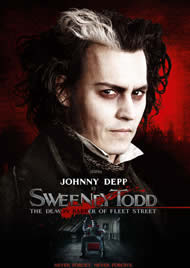
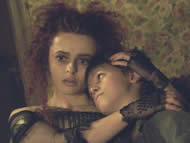 Oh, yes, there will be blood. In the ending of Tim Burton's Sweeney Todd, there will be much, much more.