Zombos Says: Classic
Make
me a willow cabin at your gate,
And call upon my soul within the house;
Write loyal cantons of contemned love
And sing them loud even in the dead of night;
(from William Shakespeare's Twelfth Night)
"You must be kidding," said Zombos, tossing the DVD over to me.
"No, really, it's a hoot," said Paul Hollstenwall. This time he brought along the straight to DVD movie The Blood Shed. The man has gone too far this time.
"Your average inbred, hillbilly, cannibalistic family," I read out loud from the DVD cover. "Paul, I'm not sure this is appropriate. I can't imagine watching this while sipping my hot chocolate and Sambuca. How about we start with something more apropos of the holiday season? A cozy journey into hysteria and terror by a roaring fireplace might be good. And a twist ending. There's nothing like hysteria and terror with a twist ending."
"Something with a touch of ghosts and evil spirits, I think, and British accents," added Zombos.
"Dead of Night," we both volunteered.
"Well, okay. But then will you watch The Blood Shed afterwards?" asked Paul eagerly. "It goes great with popcorn."
We grimly nodded yes. Such are the vagaries of the horror movie fan's life. Maybe I’ll have the League of Reluctant Reviewers deal with The Blood Shed. They are my go-to people for reviewing the most questionable (or is that objectionable) in horror cinema. But for now, the Dead of Night beckons.
It is the starched collar, stiff upper lip in the face of the irrational that gives this British horror entry an unusual cadence, which still works its devilish magic today. Mervyn Johns, the quintessential Bob Cratchit in 1951's Scrooge, plays architect Walter Craig. His modest appearance, his earnest demeanor, and his nightmare-bedeviled mind come up against the weird at a country estate where he unexpectedly meets those persons, now real flesh and blood, rattling him in his sleep. Is it déjà vu, or is something more sinister afoot?
Assembled in the living room of the country house he's come to remodel, they are, at first, surprised by his assertions of familiarity. They quickly warm up to his odd precognition, however, and eagerly describe their own brushes with the preternatural, one by one, including the pooh-poohing psychologist, who saves the most chilling encounter for last.
This sets up the movie's stories within a framing narrative, with each tale delivering a stronger jolt of the inexplicable intruding into the mundane world; culminating in a whirligig ending, with Craig smack in the thick of it, twisting back to the beginning. But the beginning is the main question he desperately puts the puzzling pieces together in search of an answer.
The caliber of acting is A movie. Michael Redgrave caps off the strong cast with his portrayal of a frazzled ventriloquist whose vent dummy won't shut up. In the last and strongest story to be told, this one by the psychologist who admits he's baffled by the encounter.
Ventriloquist Maxwell Frere no longer does all the talking in his act. When his dapper but nasty alter ego, Hugo, goes looking for a new lap to sit in, Frere goes off the very deep end and winds up bashing the dummy's face to pulp. But you just can't keep a bad dummy down in horror, so Hugo returns to run the act his way. Madness? Perhaps. But there's still an air of the weird with Hugo appearing larger than his wooden life would normally allow.
Another strong segment involves a three-panel mirror bought in an antique shop. Old, ornate, and decidedly evil in its reflections, the mirror bodes ill to the poor fellow who receives it as a birthday present from his wife. Obviously not a watcher of the Antiques Roadshow, she decides to learn the provenance of the damned thing after she buys it, much to her regret. Of course, when the shopkeeper tells her about the mirror's previous owner's misfortune, prefacing his horrifying story with his hope she's not superstitious, the chill-to-her-bone realization of what's happening to her husband sends her straight away to set matters right. This story’s mood of impending doom comes from the mirror's reflection of a sinister-looking Victorian room, and the deleterious effect it has on her husband who only sees himself standing in it even when his wife is by his side.
Separating these two tales of stark terror is a pawky romantic rivalry between two quirky golfers and their infatuation with a woman who can't decide which to marry. Loosely based on H.G. Wells' The Story of the Inexperienced Ghost, it is often criticized as the weakest of the five stories. However, it does provide an absurd humor interlude from the more serious scares. Told by the host of the country house who doesn't have a real supernatural encounter to relate—but makes one up anyway—it's an Alfred Hitchock Presents-styled twist ending involving an unwanted haunting and the need for fair play. Its whimsical nature fits in with the host's personality, and provides contrast to the overall narrative of Craig's predicament. It also provides a showcase for the British comedy duo of Basil Radford and Naunton Wayne (Charters and Caldicott in Hitchcock's The Lady Vanishes).
As each story is told, Craig and the psychiatrist argue over their true supernatural experiences. More and more, the architect becomes trapped by events playing out according to his dream, leading him to an inescapable compulsion. But what is real, and what are whispers and shadows heard and seen only in the dead of night is anyone's guess; especially Craig's.
This portmanteau movie's five segments were handled by four directors, and each story supports the main narrative of Walter Craig's nightmare dilemma. In its initial American release, the opening Yuletide ghost story and the lighter golfing interlude were cut, muddling the pacing and leaving one lodge guest without a story to tell.
This classic compendium of the macabre had a strong influence on subsequent horror movies because of its eerie moodiness and is well worth a view, especially in the dead of night.
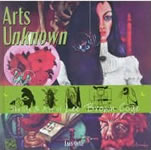 Any fan of Weird Tales and Arkham House is familiar with Lee Brown Coye's monstrous abominations put to paper. His distorted, macabre drawings hint at the abnormal, the unsavory, and the unholy.
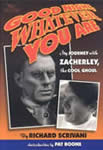 Now I know it would be narrow-minded of me to say that the '50s and '60s were a wonderful time for everyone who grew up then, but I can say with certainty that there was one wonderful part of it that anyone could share in, whatever you were: Zacherley. In Richard Scrivani's book, Goodnight, Whatever You Are!: My Journey with Zacherley, the Cool Ghoul, he reminds us of a time when monsters ruled the nascent airwaves, and Zacherley reigned as the TV horror host with the most, and flaunted it to the horror of many parents and authoritarians.
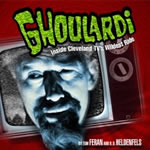 You know someone from Cleveland? Well then, pick up a copy of Ghoulardi: Inside Cleveland TV's Wildest Ride by Tom Feran and Rich Heldenfels. In the 1960's , the hottest show on Cleveland's WJW late-night television was Ernie Anderson's beatnik persona, bad horror movie put-down artist extraodinaire, Ghoulardi, jiving to an internal beat that rocked audiences, especially his younger fans, with his wacky shenanigans. As horror host to some of the worst films imaginable, he warned, "this movie is so bad, you should just go to bed." But his audience didn't go to bed, and instead tuned in as he turned them on with laughs by dropping into a film's godawful scenes by superimposing himself onto the film, hamming it up with his improvisations. Anything and anyone was fair game for his outlandish antics, and making with the boom booms (fireworks) was a highlight of the show until he almost burned the studio down. Comedian Drew Carey paid tribute to Ernie Anderson's Ghoulardi by wearing a faded Ghoulardi t-shirt on his sitcom, The Drew Carey Show.
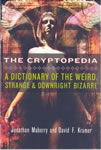 It's the explorer, the discoverer in me that enjoys reading about creepy bumps-in the-night; Vampire Universe by Jonathan Maberry and The Cryptopedia: A Dictionary of the Weird, Strange, and Downright Bizarre by Jonathan Maberry and David F. Kramer, are filled with lots of these wonderfully creepy bumps and more.
 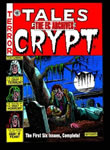 Nothing says you really care more to a horror fan than giving him or her those unwholesomely gruesome terror comics from the 1950s. The EC Archives: Tales From the Crypt, Volume One reprints the first six issues of the legendary EC Comics horror title that did more to scare parents than their kids who eagerly devoured each issue before the Comics Code Authority came along to ruin the fun. Between the hard covers of this oversized book, every wart, decaying zombie, freshly dug grave, and frightened victim is back for more in vivid color, as well as each issue's striking cover and Crypt-Keeper's Corner letter section. Pair it up with The EC Archives: The Vault of Horror, Volume One, and you'll be more popular than the yule log this holiday season.
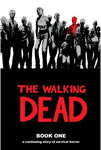 For the zombie lover on your list, the ultimate gift is The Walking Dead, Book One. This continuing story of survival horror remains a nail-biting drama as writer Robert Kirkman, and artists Tony Moore and Charlie Adlard focus on the people living a nightmare that never ends. Waking from a coma, the terror is just beginning for Rick Grimes, who must be alert every minute of every day as the zombies prowl everywhere, ready to bite down hard. Meeting survivors along the way, his struggle becomes their's, and soon it's not just the dead causing problems. The black and white illustration is gory when it needs to be, but mostly tells the growing and failing relationships between the people constantly moving to find shelter, food, and a peaceful night's sleep with straightforward style and clarity. Between zombie attacks, heated arguments, lucky chances and bad choices, The Walking Dead is a continuing series that never slackens its pace.
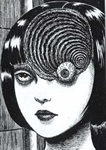 In no other manga series is the grotesque and arabesque displayed so poetically than in Junji Ito's Lovecraftian-styled confection of spiraling, out of control horror, Uzumaki, Volumes 1, 2 and 3. Combining absurdity, whimsy, terror and alienation in three volumes, it stands out as one of the most entertainingly creepy and original series of manga stories currently available.
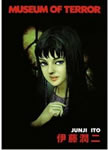 Ito has a fetish for beautiful, long-haired high school girls, and in Museum of Terror : Tomie, Volumes 1 and 2, he unleashes from his morbid mind his most beguiling black-haired beauty to terrorize her unending succession of admirers. It wouldn't be so bad if they would just stop murdering her and cutting her up into bloody chunks. She doesn't really seem to mind, however, because she keeps coming back. Again and again, she grows from a bit here and there back into her beautiful, long-haired, beguiling self, driving the men in her "lives" to obsession and murder. Again and again. She has a nasty habit of leaving them worse for wear, too. Given such a clever, natural plot-thread for sequelization possibilities, it's no wonder Tomie was turned into a series of films.
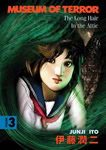 In Museum of Terror: The Long Hair in the Attic, Ito turns his fancy to another long-haired beauty named Chiemi. When she returns home with a broken heart, rats in the attic take a liking to her. Actually, to her hair more than her, but what's a girl to do? Before she can cut it into a shorter doo, her hair has other plans. This title story is just one of many that places high-school girls and boys in various predicaments of terror.
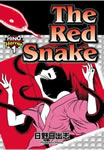 Any hardcore horror fan would love a copy of Lullabies and his Hino Horror 1: The Red Snake. Here, the younger member of a truly unsavory family is trapped by a dark forest that never lets him leave, and a house that contains an ancient mirror, behind which lies a maze of long corridors filled with demons from hell. And you thought the commute to work was bad. Grandma thinks she's a chicken and lives in a nest of twigs, Grandpa has puss-filled warts that he likes having squeezed, and dad collects bugs, lots of bugs. All hell breaks loose when a crack in the mirror lets the demons out. Just make sure you don't eat before reading this one.
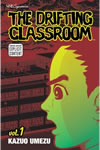 setting in, pitting kid against kid and teacher against teacher. Be warned: kids and teachers drop like flies in this manga. While there is little gory illustration, Umezu keeps constant tension going from panel to panel, and the frying relationships between everyone moves the story at a fever pitch. There is a real sense of horror here as estrangement from their normal life and parents leaves the kids in shock and disbelief, and the teachers without a clue as to what to do.
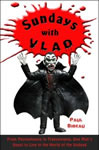 In his book, Sundays with Vlad: From Pennsylvania to Transylvania, One Man's Quest to Live in the World of the Undead, journalist Paul Bibeau packs his lifelong fascination with vampires into his Gladstone bag and heads for the hills of Transylvania to find the true Dracula. What he finds along the way is hilarious, delirious, and never disingenuous. From the foothills of the Carpathians, to the wild woods of New Jersey and the wide aisles of Wal-Mart, his search for the real Dracula will leave you wishing you were along for the ride. Along the way you will meet Bela Lugosi Jr., fighting to protect his famous father's rights of publicity, enter the Goth world of eternal night, with or without fangs, and trip the light fantasy with LARPers, those cheeky-geeky live action role playing savants we all publicly deride, but secretly yearn to be.