From Zombos Closet

The Monster Times
Issue 37, December 1974

Gammera the Invincible kicks off this issue 37 of The Monster Times, while the Planet of the Apes television series is given due attention, as well as the X-rated Flesh Gordon, that naughty version of our favorite planet-tripping serial hero. I recall seeing this oddity in a somewhat scrubby looking theater. Ah, the 1970s! Oh, and director Brian Clemens is interviewed. On the comics-side, The Spectre Returns, and there's the nifty Con-Calendar giving the rundown on upcoming conventions ("As with most gatherings of fans, the conventions often border on the insane, but the people are friendly and there's always a good chance you'll pick up some rare item for your collection."). In the Lousy Film Department is The Killer Shrews. Articles like Robots in the Cinema and part 2 of The Gothic Tradition in Film by Professor John Tibett make this issue a class act (in spite of the Flesh Gordon blasting all over the Universe coverage, of course).

  The-monster-times-37_cover

The Monster Times
Issue 40, April 1975

The Monster Times was a cheeky blend of movie and comic book coverage for horror, science fiction, and fantasy fans. Its tabloid size, and very pulpy paper, were eye-catching on the newstand and aimed to capture the evolution of the 1970s pop-culture fan into a multi-genre consumer who sought out like-minded devotees of the fantastic and geeky. In this issue 40, Doctor Spector and the Monsters are revealed by Ron Haydock, Fay Ray Remembers with David S. Skipper, Gail Morgan Hickman gets Everything You Always Wanted to Know About Jim Danforth, and The Phantoms of the Opera article brings them out into the open. There's lots more, but I'll let you discover it for yourself.

The-monster-times-cover

Cracked’s For Monsters Only
Issue 8, July 1969

Sporting another stylish cover by John Severin, Cracked’s For Monsters Only issue 8 is chock full of great articles and a long, wonderfully ink-washed horror comic appearing after the requisite adverts. The usual photos with gag-captions abound. Richard Bojarski shines in this issue, writing two articles, Fantasy Films of the Forties (with a focus on Lon Chaney Jr) and Dwight Frye, the Mighty Midget of Menace (although I think Bojarski stretched a tad for that catchy title).

Crackeds-for-monsters-only-8

All About Star Trek Fan Clubs
Issue 6, December 1977

William Shatner is in the spotlight in this issue 6 of All About Star Trek Fan Clubs. In the interview conducted by Don Wigal,  Shatner confesses to not paying "much attention to fan clubs. It was too much trouble for me to go then. Now I realize I made a mistake." Barbara Walker writes about The Well Dressed Trekker in regard to Star Fleet uniforms, and Star Wars and Star Trek: Trekkers Speak Out asks "several editors of Star Trek fanzines to comment on their appreciation of this great [Star Wars] new fantasy film." (As always, click the post title to read the magazine)

All-about-star-trek-fan-clubs-6

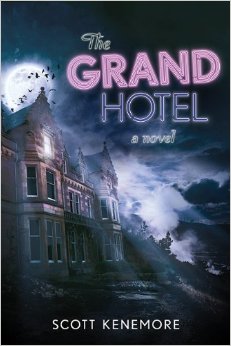
Book Review: The Grand Hotel

The-grand-hotelZombos Says: Very Good

A supercilious host who manages the front desk, a group of tourists not sure where they are, and an ancient hotel, dimly lit and filled with boundless rooms, found at the end of a “desolate, mist-shrouded street,” are the strange characters in Scott Kenemore’s portmanteau novel, The Grand Hotel. And let’s not ignore the disconcerting young red-haired girl, “perhaps 11 or 12.”

Red-haired girls are always of particular interest in movies and novels (unless you’re watching The Ring or some other Japanese Horror movie, of course, then it would be dark-haired girls instead). Anne of Green Gables had red hair, and so did Victoria in The Twilight Saga. Even Pippi Longstocking had red hair, with an attitude to match.

Kenemore’s red-haired girl doesn’t have a pet monkey or a horse like Pippi (I guess he didn’t want to go after the young adult market), but she does have other things in common with Ms. Longstocking. Take her attitude for instance. It’s as bright as her hair and attracts Vic’s attention (but don’t call him that, he hates that nickname). Vic is our reluctant front desk manager, oddly reluctant but still insistent tour guide, and the somewhat pompous narrator. He isn’t loquacious, really. He leaves most of the talking to his charges, the hotel’s regulars, who have been there perhaps too long–but are still welcomed. He also loves to use words that will have you scrambling for the dictionary. Pompous narrators like to do that.

Vic’s tour begins with Mr. Pence, a very short visit to be sure since Mr. Pence is a corpse lying in bed, behind one room’s stylish brass doorknob and keyhole. He still writes his little notes to Vic and pays his bills. Or so Vic insists as he leads the way to their next stop, the sunroom, where Mr. Orin spends much of his time. We listen, along with the small group of tourists, to Mr. Orin’s encounter with a rather large fish in Northern Alaska, then we are hustled to the grand ballroom where Ms. Kvasov dances with her tuxedoed mannequins. She also has a tale to tell as does Detective Click, who they find, where he always is, on the large western balcony of the hotel. Each person encountered is a chapter to be told, and a lesson, perhaps, to explore. But only Vic and the red-haired girl are deathly interested in the right conclusions to be drawn. When Vic threatens to end their tour immediately should the girl not be able to provide him with satisfactory answers to his questions, the game is on, yet the mystery remains until the last visit is made.

Each visit becomes a short story in itself, of encounters with demons and other odd bumps in the night, allowing Kenemore room for variety in his deeper machinations (or a cool way to use some short stories he had collecting dust). His use of words like cruor, japery, kerfuffle, and acronychal, help set the time and place and demeanor of our host. Or confuse it, just like his guests become increasingly confused about Vic’s ulterior purpose in bringing them on a tour of his grand hotel. But even the tourists aren’t sure how they found the place to begin with. Neither is the red-haired girl.

The game Clue quickly comes to mind. There is indeed a mystery to be solved, but Kenemore, providing a hint in his author’s note, states he was inspired by The Five and Twenty Tales of the Genie. I’m willing to bet, however, that he actually was lent a copy of Sivadasa’s work by Miss Scarlet, in the library, on a dark and stormy night.

Comic Book Review: Wolf Moon Issue 1
Of Wolf and Man

Wolf-moon-1-coverZombos Says: Very Good

A carefully structured balance between Cullen Bunn’s narrative and Jeremy Haun’s art keeps this first issue of Wolf Moon moving quickly, yet packed with enough groundwork explanation to set the storyline’s future progression.

Dillon, a scarred man both literally and figuratively, is haunted by the werewolf and its victims, and is consumed by his need to kill the monster. He tracks the killing sprees, looking for his chance to finally end its terror.

Unlike traditional werewolf lore’s bitten-and-be-cursed dilemma, Bunn hints at a different method of transmission, something that may be more random in its selection process for each person who hosts the transformation into the werewolf, and then is left with vivid memories of what has happened.

Making the monster especially dangerous is its joy for killing (and disemboweling, dismembering, and demolishing) every human being within reach; a graphic propensity that Haun has no trouble depicting. A notable panel shows the gooey impact as a fleeing victim’s face is suddenly mashed up against a car window by the monster’s large, hairy arm.

Why does Dillon hesitate, causing him to miss his one opportunity to finally nail the monster? Who is Mason, the other hunter, who, along with Dillon, wants to stop the werewolf from killing again? And what is causing these transformations into this killing machine at every full moon? And what the hell is going on with that cover? Let’s hope the next issues answer these questions to our satisfaction as well as this first issue sets them up.

Cracked’s For Monsters Only
Issue 9, September 1971

With the dropping of "Cracked's" in the title, and more movie articles than cartoons, this issue may still have the gag-captioned photos, but it does have more bite for serious horror fans. House of Dark Shadows, Taste the Blood of Dracula, a monster comic, and Richard Bojarski's John Carradine, The Master Villain, make this a fun read. Trog gets extensive coverage, too. 

For-monsters-only-9-cover

Mexican Lobby Card: Nabonga! (1944)

If you've snooped around my blog long enough, you would have noticed I have a thing for jungle movies and giant apes (and big gorillas). Can't explain it. Just accept it. This Mexican lobby card for Nabonga! is awesome to behold. Click it to make Nabonga even bigger! I dare you. (Note: Seasoned jungle movie lovers will notice Buster Crabbe's name is mispelled as Grabbe.)

mexican lobby card nabonga

Monster World Issue 2, May 1975
Part 2

Go to Part 1 of Monster World

In this second part to Monster World, issue 2, the story of Lon Chaney Sr. is revealed by Jeff Waisley, The Hydra Horror comic by Norman Nodel menaces readers, and Nightmare Theater episodes are examined. Also, for all those monsterkids who remember the glories of mail order before Amazon made it chic, the ad pages will bring back memories. Especially those memories where you kick yourself, again and again, regretting that you didn’t hold onto all those cool model kits and monster toys that are now worth big bucks to collectors. Just sayin’.

Monster-world-2_0024

Monster World Issue 2, May 1975
Part 1

Kicking butt on the magazine racks in 1975 was Monster World, which would turn into Quasimodo’s Monster Magazine by issue 3. I can offer no explanation for the title change, but unlike Cracked’s For Monsters Only, and Famous Monsters of Filmland, the humor and monstermash shtick were kept at bay by more rational coverage of horror movies. Critics like to point out how cheaply the magazine was printed, but at least it was filled with more than space-filling cartoons and lazy-crazy-captioned pictures used to keep copy down to bare bones. In this issue Lon Chaney Sr. and Vincent Price have articles, written by Jeff Waisley and Kenneth Kirk, respectively and coverage on House of Whipcord, King Kong, Captain Kronos, Phantom of the Paradise, Frankenstein and the Monster From Hell, and the continuation of an article on Nightmare Theater by I. Sukaynick.

Monster-world-2-cover

Cracked’s For Monsters Only
Issue 3, November 1966

With issue 3 of Cracked’s For Monsters Only, the cartoons and comic stories, the photo-gags, and the horror coverage for both old and newer monsters packed its pages well. Even the John Severin cover was quite inviting as it stared back at you from the overcrowded magazine rack daring you to join the monster party. In this issue Richard Bojarski writes a lengthy, informative article in The Horror Worlds of Karloff (and remember kids, there wasn’t any Google or Wikipedia to refer to!), the School for Monsters shows us where all those monsters appearing everywhere in the 1960s were graduating from (note that horror host Zacherle headed the employment bureau), and John Severin provided some Dungeon Dan-Dan-Dandies to chew on.

For-monsters-only-3-cover

Comic Book Ads: Not Star Wars

Hey, there's more to life than Star Wars. Here's a great ad for Buck Rogers and The Lord of the Rings. I love the way the artist has Buck Roger's starfighter zooming past Bilbo, Strider, and Sam. Talk about giving someone a hot foot. Oh, and there's also Battlestar Galactica, too. 

Comic book ad

comic book ad battlestar galactica