From Zombos Closet

JM Cozzoli

A horror and movie fan with a blog. Scary.

Captain Company Hollywood Masks!

Sure, these masks were cool to wear on Halloween–for about an hour. Then the stifling heat and discomfort would make the novelty a fading memory. But we really didn't buy these super deluxe, heavy rubber masks to wear once a year, did we? Nah. We bought them to display in our rooms. And play dress-up monster in front of the mirror.

That Mole Guy was the damn hardest to dress up half-way decently for. At least for me.

IMG

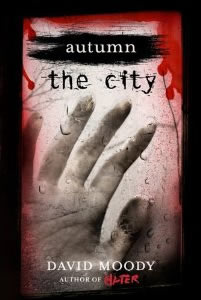
Book Review: Autumn, The City

Autumn_david moodyZombos Says: Good (but formulaic)

"We've got to kill it."
"How do we do that, then?" yelled Donna, shoving it back down with her foot. "F**king thing's been dead since Tuesday."

The walking dead in David Moody's Autumn: The City don't bite. He even avoids calling them zombies, using cadavers instead. That's what the few survivors call them when a mysterious virus, or toxin, or some biological event kills everyone else in the city. In this second book in the Autumn trilogy, the city becomes ground zero for thousands of inhabitants who violently die, then slowly reanimate–even as they continue to physically deteriorate–into predators.

Moody's undead predators do not crave brains or test the intestinal fortitude of the living by craving human flesh. They are so rotted away as to make them easy to knock over and avoid. One at a time. It's when they gather in groups they become a problem. Noise, fire, bickering living people, and just about any lively activity attracts them; and when the undead see a large group of undead they meander over to see what's so interesting. That's the problem faced by the survivors, with some holed up in the university, others holed up in an office building, and the 300 hundred or so soldiers holed up in their bunker. How they deal with the problem is the gist of Moody's story.

With his cadavers not exhibiting the usually more culturally popular and expected characteristics of gruesome dining, Moody deals with the post-apocalyptic angst his survivors are going through instead. His people aren't unusually resourceful or altruistic or despicable; they just want to survive with whatever semblance of their past lives they can keep together. Something not easy to do when food is scarce, the stench of decay is eye-watering, and thousands-going-on millions of undead want to beat the living daylights out of you, if only to pass their mordant time away.

With so many undead stumbling in the way, it wouldn't be possible for the survivors to reach each other, or find a way to escape, unless some leeway is given. Moody's cadavers are harmless initially, but begin to grow in to their new reality in stages: listless and clueless at first, then becoming faster, more aggressive, and more aware of those different from them. This transition from no problem, but they stink, to oh, crap, we better get out of here isn't played up for all it could be worth.  It generates a modicum of tension as the living argue over staying put or leaving, and how to get from point a to point b, without being noticed if and when they decide to go, but more of the novel's time is spent on primary actions without much character description or depth: the basics of arguing, despairing, avoiding, and finding transportation are here, and not much else. Unlike his Hater's first-person, roller-coastering now point of view, The City is written in third-person, past-tense, and, while breezily paced, doesn't hold the emotional clout of that novel.

One character stands out. Nathan. He's selfish, frightened–though he talks tough–and wants so badly for his normal life to come back that he's frozen to the spot. His goal is to find a club or bar and drink himself into a stupor; then find another club or bar and keep pouring into a deeper stupor. His single-minded, ultimately pointless, and altogether sad outlook, provides a fulcrum for emotional depth Moody tips at, but never loads heavy.

Like his cadavers, Autumn: The City is lightweight zombie fare and, while easy to read through, page by page, should be more threatening and oppressively dire in its possibilities.

A print copy of Autumn: The City was provided for this review by St. Martin's Press.

The Hunchback of Notre Dame (1923)
Movie Program

My eyes popped out when I saw this 1923 souvenir program for The Hunchback of Notre Dame in Professor Kinema’s archives. After I put them back in so I could see better, I knew I had to share these fantastic 18 pages of movie history. And you don’t even need to pay the 25¢ cover charge!

hunchback of notre dame souvenir program

Captain Company Guillotine With Victim

Harmless Fun? Sure, it's only plastic. Cheap thrills? For only 98¢ it was a bargain.

Just flick a switch and down the blade came to lob off the victim's head, again and again. Did it start a chorus of angry parents chanting "off with Aurora's head!" Sadly, yes. Any idiot who thought whacking off tiny plastic heads from tiny plastic bodies could lead to moral decay obviously missed the point entirely: it was simply "a wonderful ornament for your desk or tabletop."

Now, what would make it truly sickening would be to put in a sound chip so the victim pleads for his life, then WHACK!!, add a nice splatty sound cutting of his screams, ending in a plop and swish-roll into the basket for a grand finale.

Wait a mo', what am I saying? That would be fantastic! Screw the glow parts in the reissue.

Hell, if they can sell those tasteless miniature toilets with their flushing sounds, I can't see why not. Moebius, you listening?

Madame Tussaud's Chamber of Horrors Guillotine made monsterkids deliriously happy and their parents delirious. The uproar put a halt to Aurora's other potential entries in the series: the Electric Chair, the Rack, and the Hanging Tree.

Those would have been nifty desk ornaments, too. Hey, Moebius…

IMG_0001

Captain Company Grow Live Monsters
And Addams Family Haunted House

When you think of it, Famous Monsters of Filmland's Captain Company was the Amazon.com for monsterkids, back in the day. Here's hoping that the new FM gets past the 'clothing thing' and branches out into more daring and exciting merchandise for young and old alike…

The Addams Family Haunted House model kit from Aurora was always a favorite for me. I must have bought 3 or 4 of these things originally (okay, sure, my model building skills suck big time), and now I've got the reissues (wisely unassembled this time) in my monsterkid collection. The glow kit and  ghosts addition versions are splendid, too.

IMG
I really miss my Grow Live Monsters. The graphics on those colorful monster cards were simply awesome to behold. It took quite a bit of gumption for me to paste the grass seeds (cha-cha-cah Chea Pet!) onto the cards (and spoil all that alien terror), but once I did, the green hair effect was sublime.

IMG_0001

Season of the Witch (2010)
A Short Season

Print001 Zombos Says: Good (in spite of itself)

There is a lot to dislike about Season of the Witch. For one,  the disenchanted knights awol from the Crusades, Felson and Behmen (Ron Perlman and Nicolas Cage), left their acting bleeding on the battlefield. I like Cage and Perlman. They are capable of much better.

Then there is the flippantly modern dialog, which grates against the grittiness of Medieval grime and Black Death Plague. Felson and Behmen might as well have been taxi drivers picking up fares in Wormwood Forest the way they banter. I don’t know when English language contractions first took hold, but given my understanding of the Dark Ages, their speech oft vexed my ears. Not that I expected Shakespearean diction, mind you, but I question director Dominic Sena’s undermining of his historical illusion in this way. Thankfully he didn’t add a thumping rock score.

Print003

For more dislikes I’ll add: the superfluous voice-over ruining the mood of the ending long shot; the Devil’s wimpy voice (both of them, oddly enough), and the dead monks scampering across the walls–so J-Horror yesterday, you know what I mean?–were enough to make me write ill about them.

And so I have.

But Season of the Witch is still a good movie in spite of itself. It just doesn’t try hard enough (aka poor choices made in production). It hurries past its subtexts like the opening montage of battles hurries us through the long years of Crusading in just a few moments, and leaves us accepting it all at face value.

A peaches and cream complexioned young woman (Claire Foy) is accused of witchcraft and blamed for causing the plague. The church desperately needs to transport her to a monastery whose  monks possess the only copy of The Greater Key of Solomon (though I believe it’s referred to as The Book of Solomon in the movie). The book contains the incantation to de-witchify her and stop the plague. Felson and Behmen are coerced into doing the transporting, though they have their doubts she’s a witch and distrust the priest (Stephen Campbell Moore) accompanying them. They also need to pass through gloomy and doomy Wormwood Forest, fraught with perils, to get there.

Now let the terror begin, or the uncertainty of the truth ignite conflict within the group, or the lost faith of both knights rekindle. Although all three of these elements fitfully glimmer they never infect the dramatis personae enough to deepen the drama or tie our emotions to it.

The uninspired and budget-limited computer-generated imagery, and the overly done Elephant Man-styled special effects makeup for plague victims–while attention to basic detail is missing–is a distraction. Look closely at Cardinal D’Ambroise’s (Christopher Lee) forehead covered in large, bubbling cysts. You will see the ambitious rubber piece droop as he talks. Look at everyone speaking and you will see perfect white teeth (except for the Cardinal).

There is a wonderfully gruesome but telling depiction of bloodletting conducted by the plague doctors as they attend to the Cardinal. Bloody rags and bowls of blood are everywhere as the group of beak doctors, dressed in their weird accouterments, go about their useless treatment. There is an energetic, Hammeresque opening teaser involving three accused witches hanged from a bridge. It not only sets up what follows but twists our perception of what we think should follow.

More of the mood, depth, and grain found in these two scenes needed to spread across the rest of the movie.

Black Swan (2010)

Print001 Zombos Says: Excellent

While other directors choose to infuriate and nauseate their audiences with outrageous human centipedes, Darren Aronofsky goes to the ballet instead to unleash Black Swan, a movie that releases the repressed demon within through restrained gore and unrestrained pirouettes.

Natalie Portman plays the emotionally crippled Nina Sayers, a New York City ballerina whose repressed sensuality and domineering mother (Barbara Hershey) keep Nina’s bedroom crowded with pink, stuffed animals, and her social life as busy as the one the little dancing ballerina in her music box has.

When offered the chance to play the dual role of the White and Black Swans in Tchaikovsky’s ballet Swan Lake, Nina’s descent into madness, and ascent into freedom, begins. Goading her on is her director, Thomas Leroy (Vincent Cassel), who, like the evil sorceror, Von Rothbart, wants to control her passion. It is this transition from White Swan, which Nina dances flawlessly, to Black Swan, which requires her to unleash a sensual side long repressed that makes Black Swan almost like watching Carrie‘s Carrie White dressed in a tutu. It is an engrossing and jarring farandole macabre, one filled with horrific moments for Nina and us as her mind splinters into paranoia and hallucination, and feeds on its fears.

Much of Black Swan is filmed in uncomfortably unsteady and confining closeups. Rarely do we see beyond what Nina sees or imagines. Like the mechanical ballerina confined to her music box, Nina’s world is confined to her apartment, her bedroom, and the ballet hall where she brutalizes her body with constant practice. A real or imagined rivalry between her and Lily (Mila Kunis), an unbridled ballerina whose sensuality makes her a natural to dance the role of the Black Swan, erupts into more self-torture for Nina. Her obsessive compulsive behaviors grow into waking nightmares. In a scene reminiscent of the nasty face peeling in Poltergeist, Nina picks at a scab until the blood flows red. Her self-scratching leaves bloody tears she’s not conscious of making. Her paranoia leads to a smashed and bloody dressing room mirror.

Aronofsky doles out gore to emphasize the physical punishment Nina is going through, and lavishes it on in one queeze-inducing hallucination: a closeup of a cracked and bloody toenail; skin-peeling; blood flowing from under a door. I wonder how the older audience in the theater felt (I was in Florida when I saw Black Swan) seeing these common horror movie images in a movie marketed as a drama and thriller?

Black Swan is a triumph of technique, tension, and metamorphosis as Nina becomes the Black Swan. And it is a horror movie. Make no mistake about that.

Funny Caption Time

Okay, I give up. There's a heck of a funny caption in this scene from RKO's Bedlam. But I can't think of it. Help! Leave your funny caption for this funny picture in the comments section. You can click it for a bigger laugh–I mean, picture.

0103_001
Picture provided by Professor Kinema.