From Zombos Closet

Follow That Crazy Rabbit

Zombos’ Closet…a vast trove of endearingly cheap thrills, including movie and book reviews, and scans of his collections of cinema pressbooks, goofy paper-cutout Halloween decorations, and his amazing collection of Mexican lobby cards from B-grade films. If you have time to descend into a serious rabbit-hole of marvelous trash-culture nostalgia, visit that site just as soon as you possibly can.” (DangerousMinds.net)

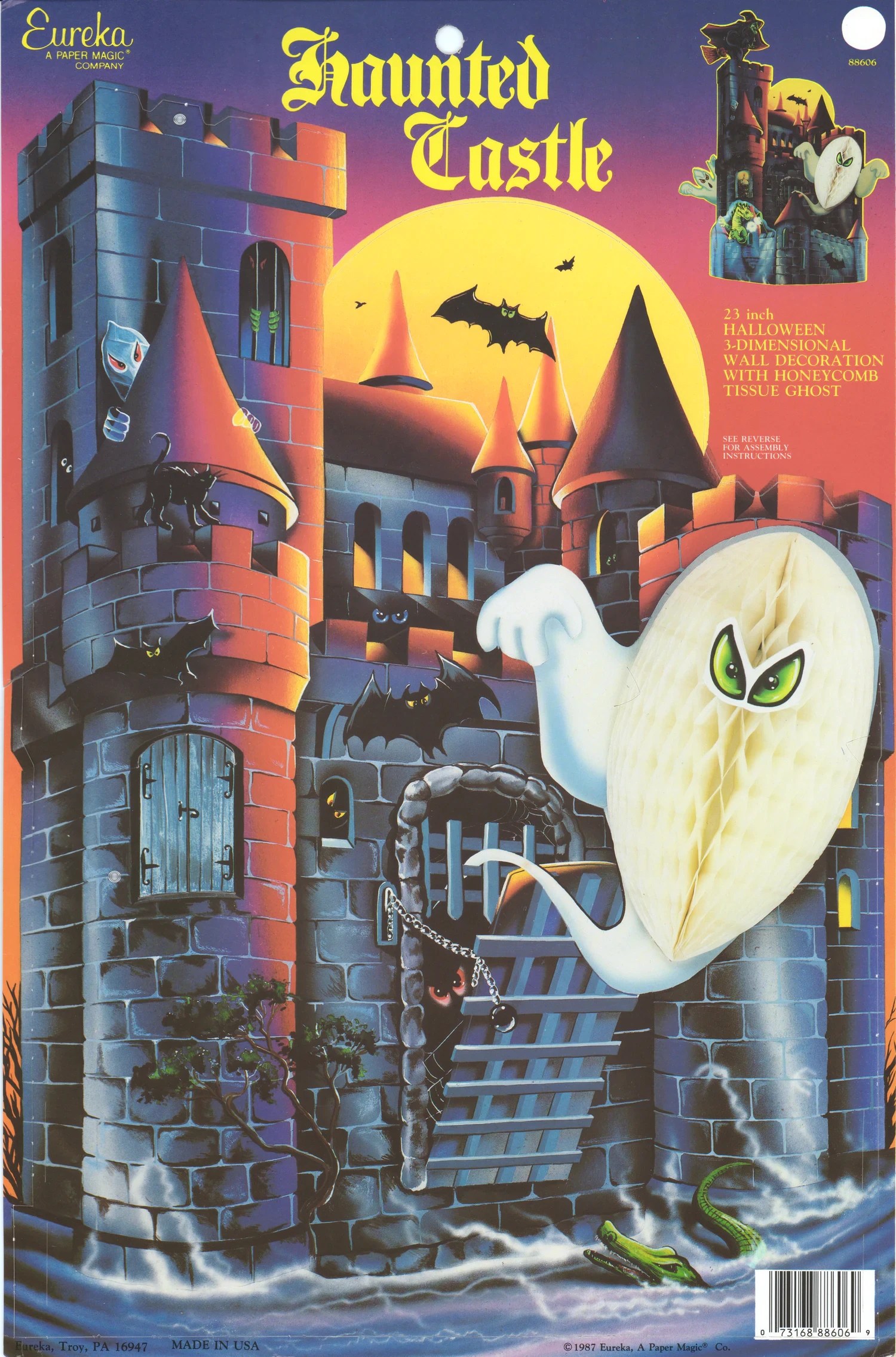
Eureka Haunted Castle Decoration

For many of us, it wasn’t Halloween without die cut decorations from Beistle or Eureka, or Gurley candles, or a Ben Cooper costume (which always made me itch). Toss in the 1970’s Halloween candy scare for good measure too. The threat of razor blades in apples and spiked candy treats did give us kids the good-kind willies while we watched our parents go bananas over it. For me, the decorations and the candles were the most enticing. I must admit to always burning the darn candles after Halloween (a real Jekyll and Hyde discussion always preceded that), but I eventually grew up and…nope, I still miss the candles. However, I did hold onto the decorations though.

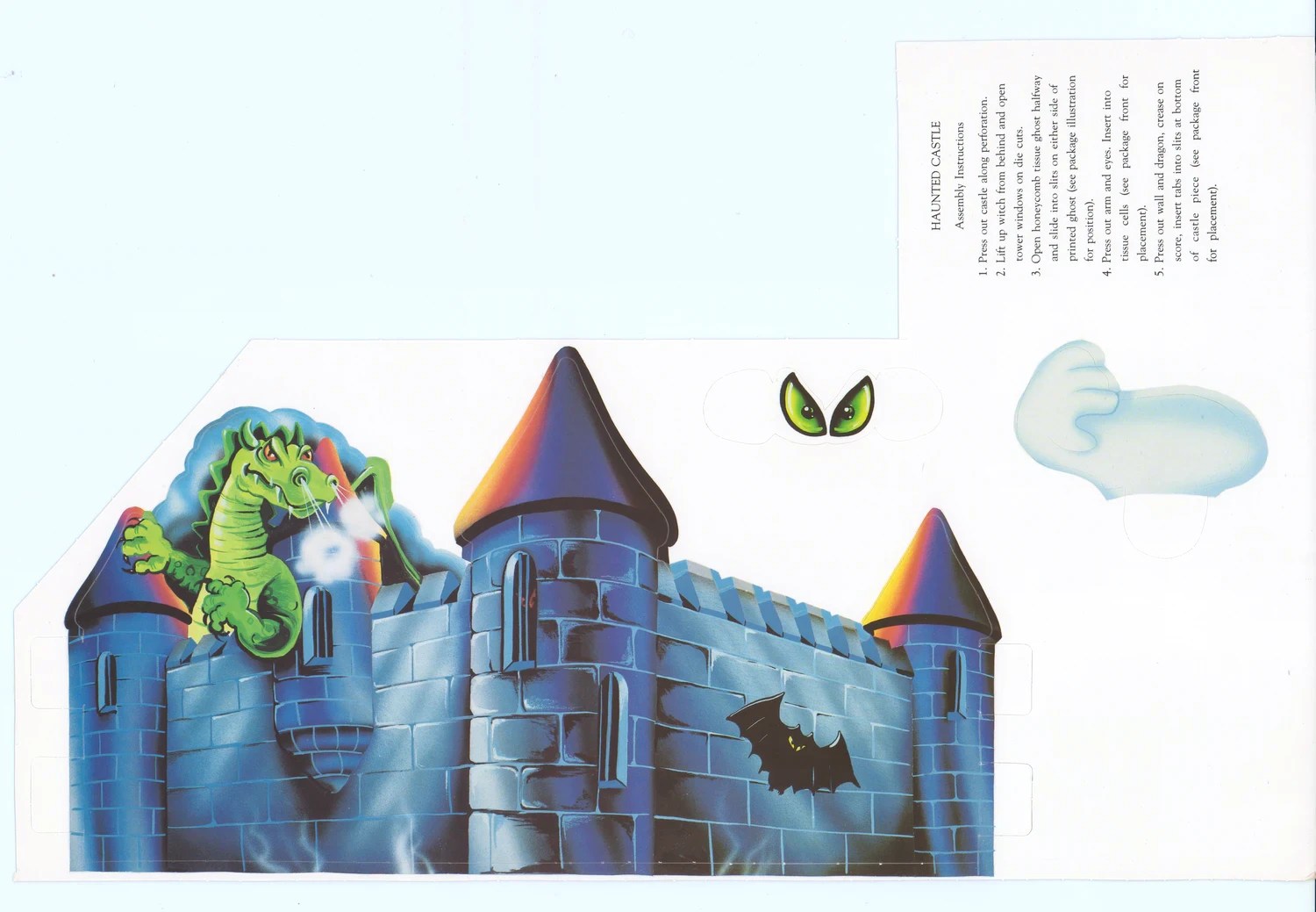
This 1987 Eureka Haunted Castle is a great table-top decoration, although the paper could have been thicker. I usually prop it up against a wall for good measure against droopiness. The ghost is a separate honey-comb piece that unfolds. Two little paper joints hold it in place. You then add the eyes and the left arm. You get the 3D going with the dragon and castle wall, the ghost, and the tower window that opens to reveal a skull. You can also just tape this up on a wall, but if you do that (as with any other paper decorations), put a piece of tape on the back of the paper first. Then you can loop a piece of tape onto it. That way, you can remove the loop later without peeling the paper and reuse the little paper devils for years and years.

Eureka Haunted Castle Decoration

beistle table top decoration of haunted castle(opens in new tab)

Eureka Haunted Castle Decoration

Captivating Mexican Lobby Cards

Mexican lobby cards can be grotesque, arabesque, trashy, and classy. Here are some of the classy ones (more or less). These cards were used to entice moviegoers into the theater for a little crime, a little murder,  a little horror, and a little departure from everyday life to get wrapped up in somebody else’s dreams and nightmares.

el pecado de ser pobre mexican lobby card
(opens in new tab) (opens in new tab) El Pecado de Ser Pobre 1950
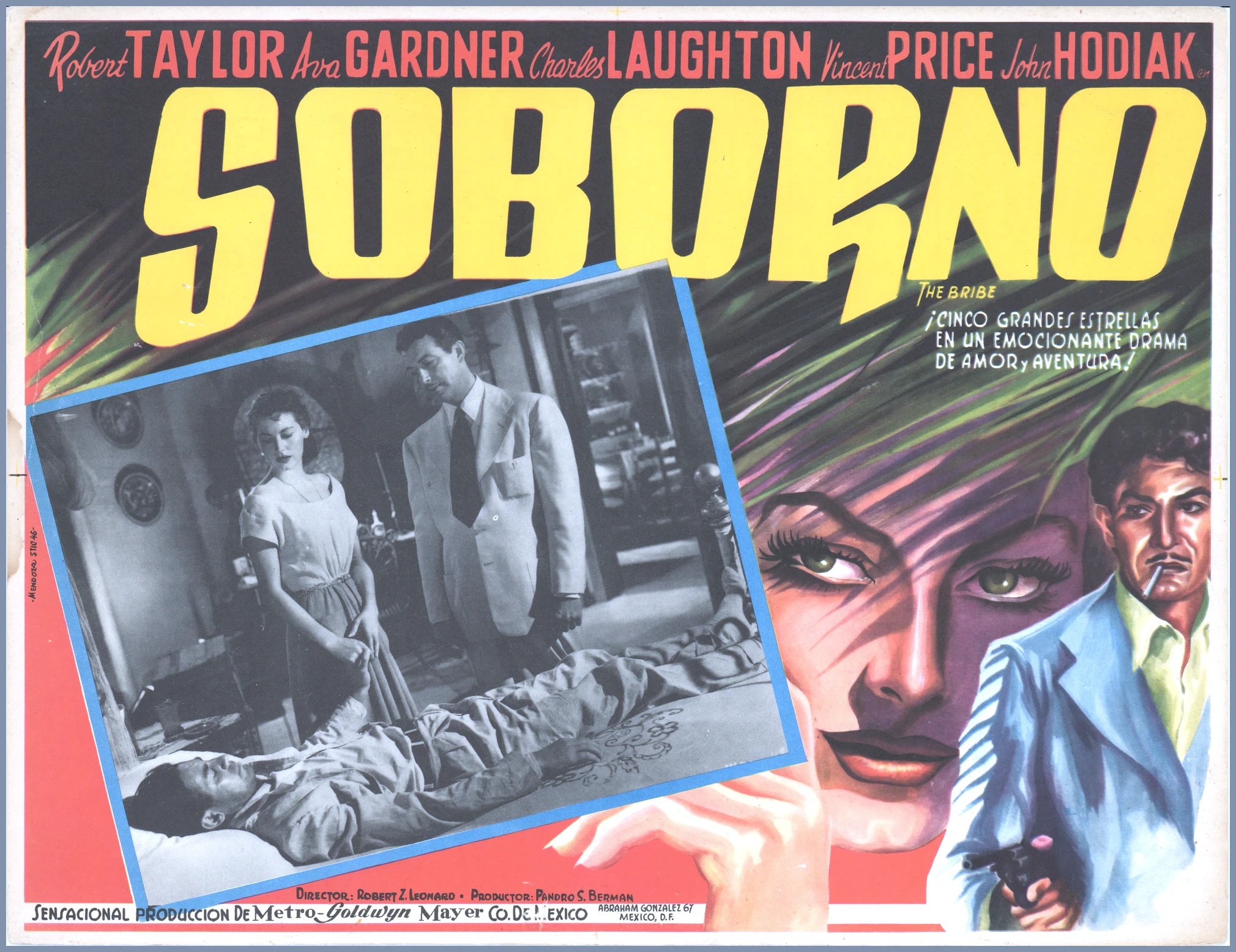
Sorborno mexican lobby card
(opens in new tab) (opens in new tab) The Bribe 1947

(opens in new tab)

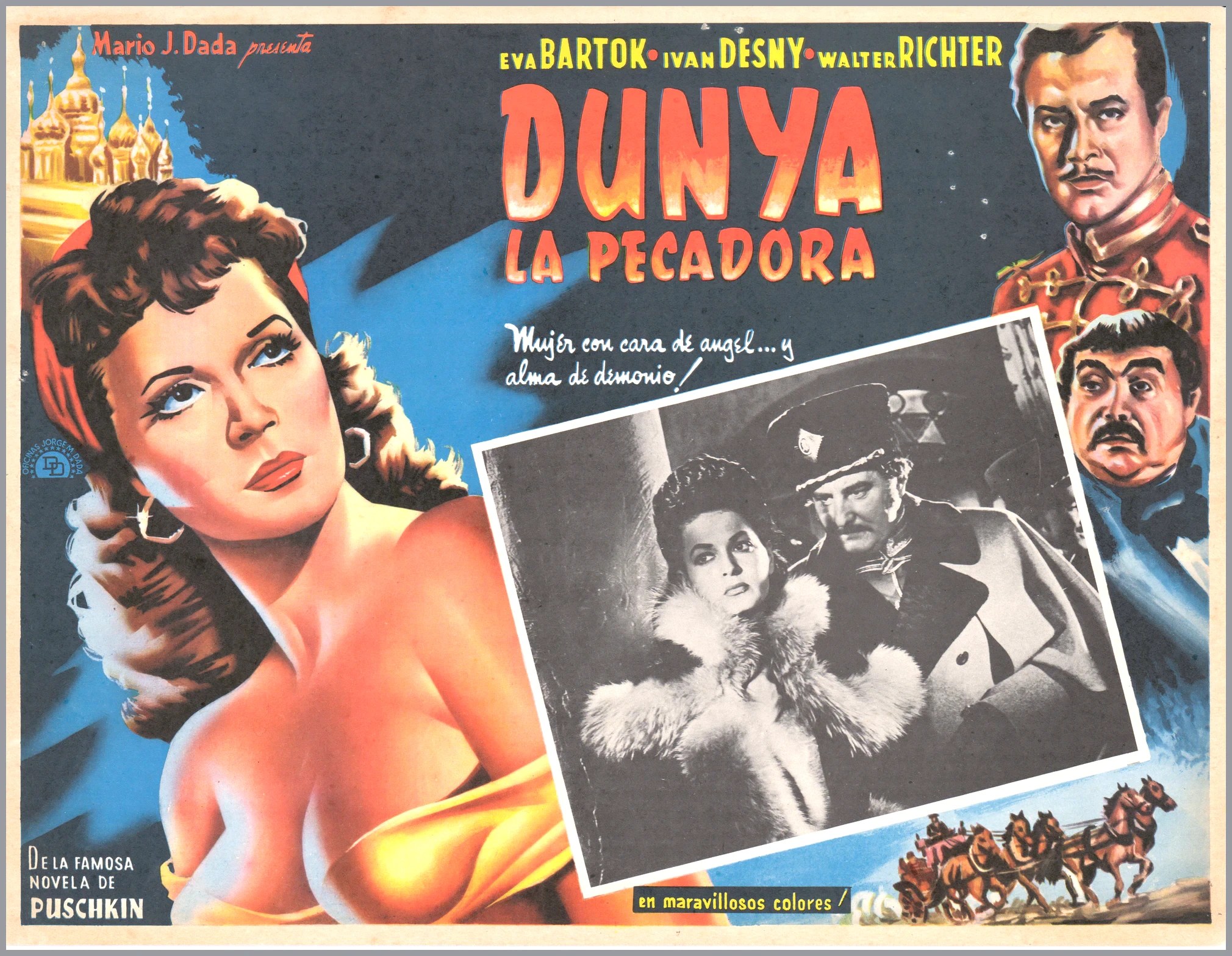
dunya la pecadora mexican lobby card
(opens in new tab) (opens in new tab) Her Crime Was Love 1955

(opens in new tab)

atrapados en la droga mexican lobby card
(opens in new tab) Atrapados en la Droga 1961

(opens in new tab)

Logan’s Run Radio Spots

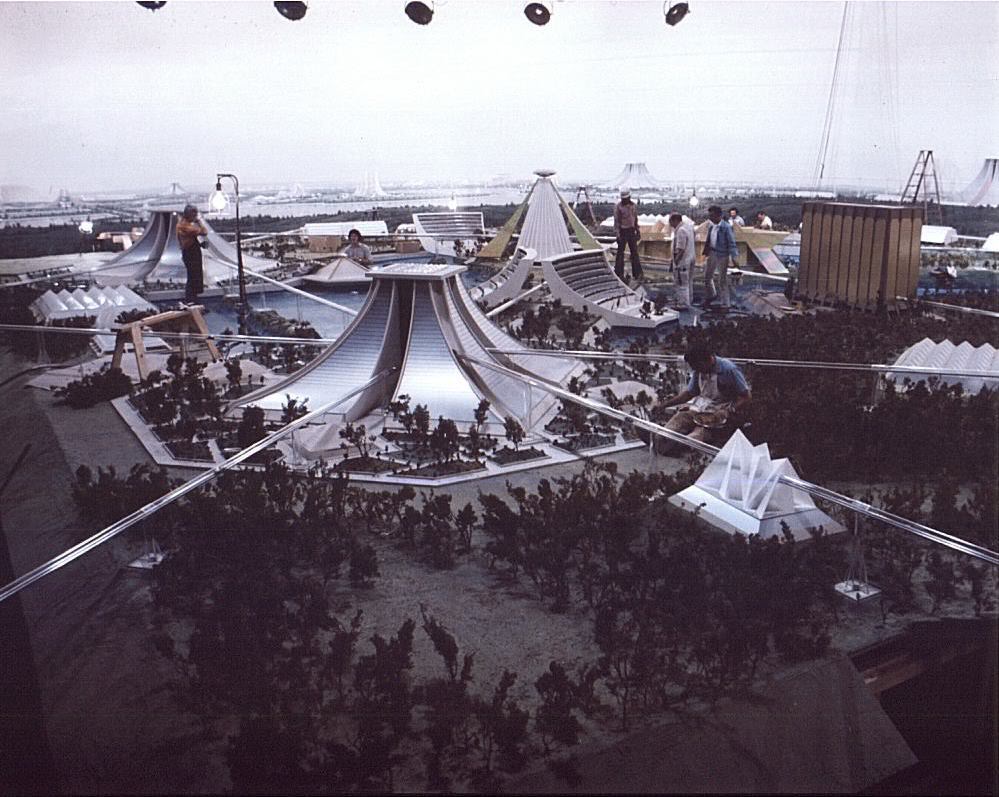
The large, impressive miniature of the city constructed by the technicians at MGM Studios. The miniature includes many trees, lakes, elevated tube “roads” with shuttlecars, and lighting effects.
(opens in new tab) (opens in new tab) The large, impressive miniature of the city constructed by the technicians at MGM Studios. The miniature includes many trees, lakes, elevated tube “roads” with shuttle cars, and lighting effects.

By Radio Reaper

Welcome, all lovers of 70s science-fiction movies! Welcome to my Radio Spot Reliquary.

I was just looking through my list of potential spots to highlight this go around and I came across a movie that I haven’t seen in a very long time so I thought I’d revisit it again.

Logan’s Run came out in 1976, and it is a very 70s-looking movie. It could almost pass for an ABC Movie of the Week with its studio shots and location shots in a couple of Texas towns.  It is a very colorful movie and the costumes are very bright. As is usual with many science fiction movies set in the future (2274), the women wear short dresses made with skimpy material while the men remain modestly covered.

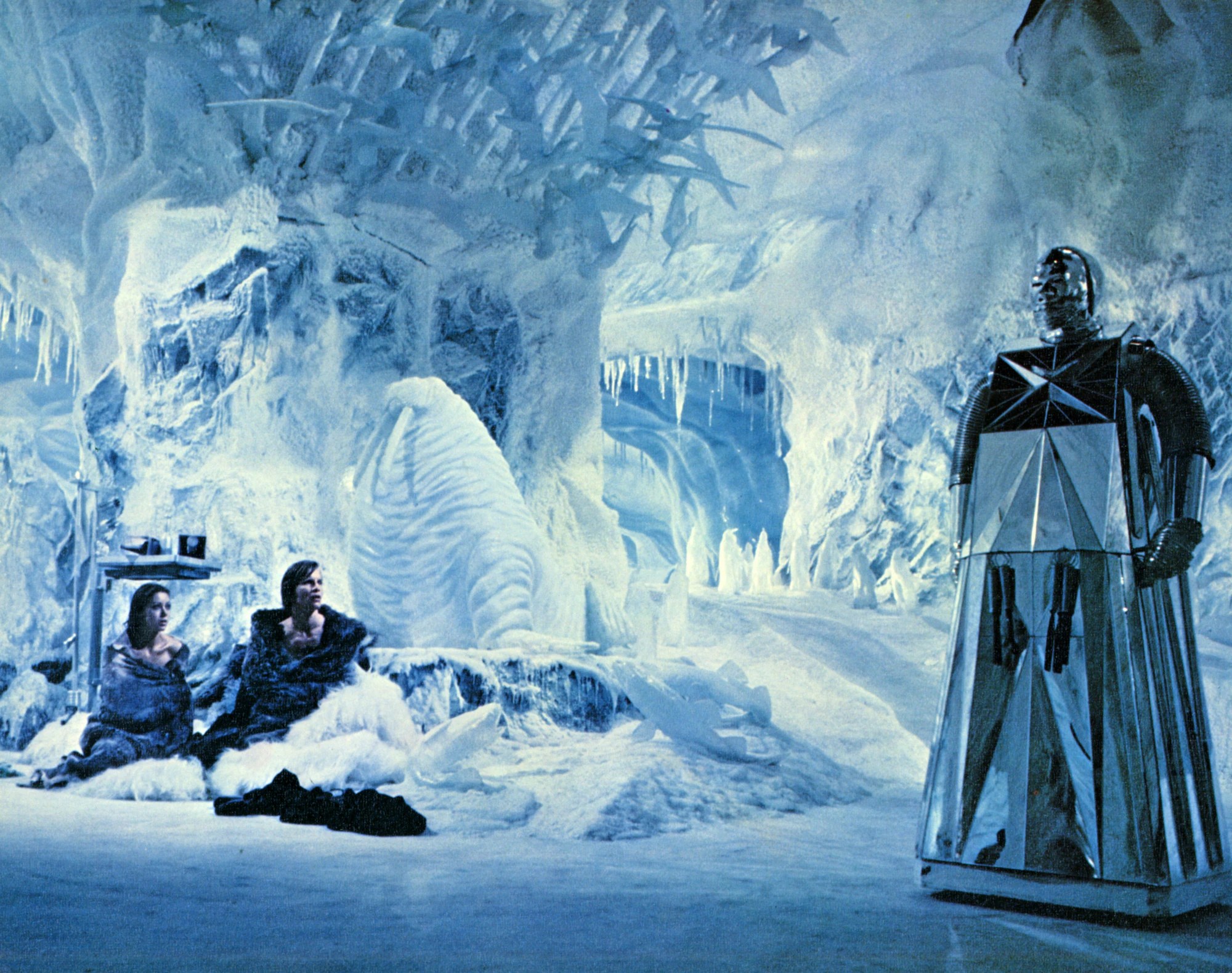
On the run, they find shelter, momentarily, in an ice cave with the dangerous Box, the robot
(opens in new tab) (opens in new tab) On the run, they find shelter, momentarily, in an ice cave with the dangerous Box, a robot.

The Dollmaker (2025)

By JM Cozzoli

the dollmaker 2025 movie still
Zombos Says: Unrelenting, bleak, dark. You probably won’t want to watch this a second time, but if you are looking for soul-withering horror, this one will do it.

Director José María Cicala makes sure everyone knows he’s pulling some Lynchian surrealness and quirk into his movie, The Dollmaker (Encantador), by the hint on Tomas’s family mailbox: it says Familia Lynch. Tomás (played all too well by Rodrigo Noya) is a quirky and weird little guy wearing thick glasses, who volunteers in a clinic but clerks in the local video store called Boy Scouts where he and his co-workers dress in Boy Scout uniforms. He has some serious mom issues, so cue the Psycho leanings, but there’s also a little something  borrowed from Ryan Reynolds’ often overlooked horror, The Voices, patched in here, so what’s taking place in the small town of Palacios is even more grotesquely disturbing to watch.

This movie may try at some lighter moments but forget about that: Rodrigo Noya’s incessant cuteness and blankness will have none of it. He creates an unforgettable character that is funny in appearance only. The sign just outside of town says donde nada malo puede suceder–where nothing bad happens–but that’s a lie. Young women are disappearing. Only the newly arrived police inspector (Alejo Garciá Pintos) asks questions while his bumbling partner and the chief (Mario Alarcon) don’t show concern. …

Michaels 2026 Halloween Highlights

Michaels never ceases to amaze and delight with their Halloween offerings year after year. For this Halloween they have the usual staples, but here are some highlights of what really stood out for me. The cool magic-related merch drew me in immediately. I bought the Houdini and Kellar banners. Houdini died on Halloween night, so a no-brainer to include him, and magic is always mysterious and spooky, making it perfect for Halloween.

Michaels Halloween 2026 Magic Merch Michaels Halloween 2026 Magic Merch Michaels Halloween 2026 Magic Merch Michaels Halloween 2026 Magic Merch

And who doesn’t like skulls, skeletons, and creepy dolls? …

The Whispering Woods Podcast

The Whispering Woods podcast logoBy JM Cozzoli

As a card-carrying member of the The Ghost Club in London (though, bummer, can’t really attend meetings because I’m over here in the U.S.), I’ve had a long-standing interest in the paranormal, the glaringly unusual, and the bewitchingly unexplained parts of life. When the American Society for Psychical Research was still located in New York City, I would visit to peruse their library. Up front, let me tell you I’m a skeptic. Which, granted, may seem at odds with my love for the chills of the unknown tapping at my shoulder while an obtuse universe insistently winks at me with mystery. There is just something so primally enticing about trying to winnow anything that is without easy answers, especially if that something gives you goosebumps in the process. …

Dick Tracy’s G-Men (1939) Pressbook

By JM Cozzoli

At 41 days, this was the longest of the Tracy serials to film. Ralph Byrd reprises his role of the famous comic-strip detective, albeit now leading FBI agents combating international spies. Irving Pichel plays Zarnoff, the villain Tracy has to thwart time and time again. With a more political theme — Zarnoff was the front for the Three Powers (World War II was beckoning) — this Tracy film provided more spy gadgetry like a gas spewing fountain pen and pulp-like intrigue. Due to ambiguous wording in the contractual agreement to finalizing a two-year option renewal, lots of phone calls and lawyers’ billing ensued as Republic and Chicago’s Famous Artists Syndicate worked out how to greenlight this third Tracy film while freeing up the second one, Dick Tracy Returns. Meanwhile, Chester Gould, the creator, artist, and writer for the comic-strip, received payment only for the first movie. Now that’s a crime. Jack Mathis, in his Valley of the Cliffhangers, provides the legal gyrations in detail.

The serial has strong physical action and fight choreography. George DeNormand served as Ralph Byrd’s main stunt double, with additional stunt work from Tom Steele, Ken Terrell, Ted Mapes, Carey Loftin, Allen Pomeroy, Bud Wolfe, and Eddie Parker, staples of Republic’s stunt corps. Visual and special effects were handled by the Lydecker brothers, who specialized in miniature work, while acing optical and physical effects. In their later years they moved into Irwin Allen’s science-fiction productions, including Lost in Space and Voyage to the Bottom of the Sea, applying the same miniature-based philosophy to a new generation of spacecraft and submarine effects ( The Files of Jerry Blake and Wikipedia).

Dick Tracy's G-Men pressbook

Those Enduring Matinee Idols
Vol.1, 1969
Chapter 1

By JM Cozzoli

Those Enduring Matinee Idols was written and published by Robert “Bob” Malcomson, who self-published it on his own dime. The first issue appeared in October 1969 and the run continued into 1974, in an 8.5 × 11 inch format, at 12 pages early on, with black-and-white stills reproduced throughout and a $1.00 cover price. Issues came out at an irregular bimonthly pace. The complete run comes to 29 issues, and in a nice touch of genre-appropriate wit, Malcomson numbered them as “chapters” rather than issues, the way a serial itself would be played in theaters. The page numbering also continues across chapters, through three volumes, for a total of 432 pages.

Chapter 1 covered Ace Drummond and Battling with Buffalo Bill; Chapter 4 took on The Return of Chandu and The Phantom Empire with Gene Autry; later issues handled Red Ryder, Dick Tracy, Tarzan, and Darkest Africa. It was the kind of information that barely existed in print at the time, since serials were considered disposable movie fare and largely ignored by film historians.

TEMI arrived at the beginning of the serial-appreciation taking place in the growing convention circuit for comics and movies, when 16mm prints were circulating among collectors and screen showings were taking place in hotels. It fed directly into fanzine popular culture that produced later titles, often published-for-love as a one or few-persons operation. Fanzines helped lay the groundwork for books like Jim Harmon and Donald Glut’s The Great Movie Serials (1972). Academic film studies eventually picked up the thread the fanzines laid down. Jon Tuska’s The Vanishing Legion (McFarland, 1982), Scott Higgins’s Matinee Melodrama (Rutgers, 2016), and Marina Dahlquist’s essay collection on Pearl White, Exporting Perilous Pauline: Pearl White and Serial Film (Illinois, 2013), all rest on filmographies and interviews that exist because hobbyists compiled them first. There are also more recent books on serials, like Gripping Chapters: The Sound Movie Serial, that are worth reading.

The complete run is up on the Internet Archive.

Those Enduring Matinee Idols vol 1 issue 1

The Ten Commandments Radio Spots

The Ten Commandments with Charlton Heston
Charlton Heston in his most memorable role. This is a rear projection shot. Farciot Edouart and his process photography team produced this colorful, captivating scene, as well as the famous tableaux shot of the three women awestruck by what they are seeing.

By Granny Creech

The other day I had the girls over for afternoon tea and cookies, and to catch up on the latest news around Squirrel Hollow. They all were here…Hester Grimple, Vespera Howler, Winifred Hawthorne, Esmeree Grimshaw and  Elspeth Darkmoor.

We had a great time telling who was up to what, who had been where, who had been seen with whom, and general “girl talk.” As usual, the conversation got around to movies and who had seen what. I told them I had a neat little game to play with them and they seemed interested.

“I am going to name a famous movie and I want you to tell me the scene that stands out the most to you in that movie,” I said. “It should be fun and interesting!”

They squirmed and shifted in their chairs and big smiles came across their faces.
“Ready?” I asked. “Here we go.”

“Star Wars!”

“The Death Star attack!” or something similar echoed from their mouths almost simultaneously.

“Psycho!”

“The shower scene!” Everyone laughed because the answer came out in unison.

“The original “Hercules!”

“Steve Reeves!” shouted Elspeth, and we all laughed.

“Yes, we can all agree any scene Steve Reeves was in was the best,” I said, trying to regain control of the group. “But which scene stands out?”

“That iconic scene of him chained between the pillars at the end where he pulls the palace down,” chimed Hester. Everyone nodded in agreement.

“The Bridge on the River Kwai!”

“The bridge blowing up and the train crashing down.”

“Yes,” I said, “and all done full scale…no miniatures. One chance to get it right.”

“Casablanca!”

There was a pause. Vespera eventually said, ”As Time Goes By.” She said it with a lilt to her voice which sounded almost melancholic.

“The goodbye ending,” said Esmeree. “We’ll always have Paris.”

I was surprised at the quiet that overcame the group.

“I guess we all have been there…a case of lost love. Anyone who has experienced it can identify with that movie,” I said. “Well, let’s move on. “King Kong!”

“The Empire State Building!” The group sprang back to life. “I just go ape over that movie!” said Winifred. We all laughed and groaned.

“Forbidden Planet!”

“The attack of the ID monster!” They all agreed on that one.

“The Ten Commandments!”

“The parting of the Red Sea!” everyone shouted in unison, which brought everyone to uncontrollable laughter. …

Lovecraftian Esoteric Groups
A Primer


black and white etching of a lovecraftian secret society meeting in a catacomb
By Uncle Bob’s AI and JM Cozzoli

Cults, hereditary orders, and esoteric sects run through Lovecraft’s oeuvre. These organizations (groups) are the human side, mostly, of the Mythos: ordinary people, questionable people, and those that are not quite people, who have gladly or dangerously made contact with the Great Old Ones and the Outer Gods, while awaiting, summoning, or trying to hobnob with them. This incomplete but important primer lists the principal groups in Lovecraft’s own writing, then broadens to later authors who borrowed, extended, and tricked them out into the growing Cthulhu Mythos.  References are cited at the end.


In Lovecraft’s Own Writing

The Cult of Cthulhu   The Call of Cthulhu (1928)

A diffuse, worldwide secret cult that worships the Great Old Ones and awaits the day “when the stars are right” and Cthulhu rises from sunken R’lyeh. Lovecraft shows it through degenerate swamp worshippers in the Louisiana bayous and the Esquimaux diabolists of Greenland, with others alluded to in New Zealand and beyond, united by the chant “Ph’nglui mglw’nafh Cthulhu R’lyeh wgah’nagl fhtagn.” The captured cultist Old Castro supplies its doctrine. The story was first published in Weird Tales in February 1928, and this cult is the template for nearly every Mythos cult that follows.

The Esoteric Order of Dagon   The Shadow over Innsmouth (1936)

A hereditary religious order founded by Captain Obed Marsh in the decayed Massachusetts port of Innsmouth, where it displaced the town’s Christian churches after Marsh returned from the South Seas around 1838. Members worship Dagon, Mother Hydra, and (to a lesser degree) Cthulhu, and interbreed with the amphibious Deep Ones in exchange for gold and bountiful fishing. Written in 1931 and first published in 1936, it is Lovecraft’s most realized cult, most alluded to by later writers.

The Church of Starry Wisdom   The Haunter of the Dark (1936)

A Providence sect founded around 1844 by Professor Enoch Bowen, an archaeologist and occultist, which used the Shining Trapezohedron to summon and commune with an avatar of Nyarlathotep, the “Haunter” of the title. Public outcry and a string of disappearances eventually shut it down. Lovecraft wrote the story for his correspondent Robert Bloch as part of a friendly exchange of tales, and the church has had a long afterlife in other hands.

The Witch-Cult of Keziah Mason   The Dreams in the Witch House (1933)

The lineage of Keziah Mason, a Salem witch who vanished from captivity in 1692 and used non-Euclidean geometry to slip between dimensions. She is served by the rat-like familiar Brown Jenkin and ultimately by the Black Man — Nyarlathotep in human guise — having signed the Book of Azathoth. First published in the July 1933 Weird Tales, the story fuses period witch-cult lore with Mythos cosmology.

The Red Hook Cult   The Horror at Red Hook (1927)

A syncretic immigrant cult in Brooklyn led by the wealthy scholar Robert Suydam, worshipping Lilith and pre-human powers through Kabbalistic and Near-Eastern ritual. More occult-criminal than cosmic, it is an early sketch of the esoteric group idea Lovecraft would later perfect.

The Kingsport Yule Cult   The Festival (1925)

A hereditary New England family cult that performs an ancient subterranean Yuletide rite beneath the old town of Kingsport. Less a formal organization than an inherited tradition of worship passed down through bloodlines. Leave it to Lovecraft to dampen the Christmas spirit.

Human Servitors of the Mi-Go   The Whisperer in Darkness (1931)

Not a named body, but a network of human agents who do the bidding of the Mi-Go (the Fungi from Yuggoth) in the Vermont hills, helping conceal the aliens’ presence and their practice of removing human brains into cylinders for transport between worlds.