The Fantastic Four Face Their Greatest Foes -- The Director and Writers of
Fantastic Four 2015!
Brought to you in all its mind-blowing tragedy by Zombos and Company
Embellished by JM Cozzoli
Lettered by Typepad
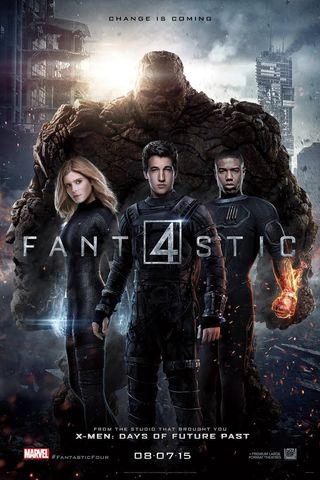
"The poster is wrong. Change isn't coming for the Fantastic Four," I said to Zombos.
"You are taking this way too personally, you know," he replied. "It is only a reboot of a reboot, once more into the breach and popcorn bucket, after all. Just look at that mugshot poster. Dreadful. One expects them to break into a West Side Story song at any moment."
I started humming the theme from West Side Story. I imagined Ben Grimm and Victor Von Doom squaring off in a choreographed dance of battle. If only this movie were that clever.
But it isn't. It's contrite. It's tedious. It's misguided. It's not the Fantastic Four, the superheroes that helped usher in the Silver Age of comic books. I was grievously disappointed with Rise of the Silver Surfer in 2007, but this is worse. This wounds my comic book fan soul deeply.
My thoughts were racing alongside the snail-pace of this movie--
--Why, after taking us to another dimension, are we still in the same one with another gloomy story, gloomy character angst abounding, and insufferably gloomy lighting and color-muting in every freaking scene? I overheard a couple, leaving ahead of me after the early bird showing, say how awful this movie is. They thought the first movie was better. I agree, somewhat, but I'd stop short declaring this movie is awful. It's just misguided. And if you took out the Fantastic Four it would even be okay--
But it's a movie about the Fantastic Four and that's what's wrong here. So many issues, so many storylines, so many worlds to visit, yet, once again, we watch Victor Von Doom (Toby Kebbell)--
"You hesitated there. I bet you were tempted to write Tony Kibles and Bits, were you not?" said Zombos, standing over my shoulder like Uatu the Watcher.
"No, I certainly was not going to be so unprofessional and take a cheap shot like...well, yeah, okay, I was tempted. But I fought it and won, okay," I said in defense.
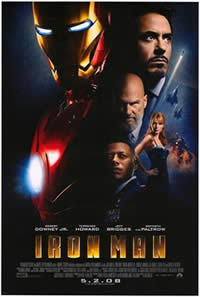
--in the same story we've seen before, now rehashed with younger characters for the Young Adult market, with zero camera chemistry between them. So one immediately wonders how good a team they would really be. Doom is more even more anti-social this time, but he's AGAIN imbued with cosmic powers and an alien skin that mimics his actual (and quite technologically lethal) armor in the comic books. It's amazing how Iron Man and every other superhero and villain can get away with wearing a costume or body armor, but Doom's just pegged by Hollywood to forever wear an apologetic and organic suit every time.
He's AGAIN ready to destroy, destroy, destroy. This time he's got a nifty Scanners' ability to blow up heads, which he does a lot. Great summer family movie idea there. Hey, let's give him green-glowing eyes and have him pop heads with splots of blood and gore. He just doesn't use his head-popping power on the FF because, well, then the movie would be over. But everybody else is fair game, okay?
"Yes, but the Thing's (Jamie Bell) rocky start is rather good one, do you not think so? He really looks like a thing this time," said Zombos.
"Sure, for a horror movie, if you think spending most of the movie in a rock pile is super, then I suppose so. Not much clobbering time for the Thing or anyone else for that matter, except for the studio's tacked on battle at the end with Doom in the rock and energy dimension. So Ben Grimm is very very grim all through the movie, gets his rocky start, then mopes some more while we wait for Reed Richards (Miles Teller) to come out of his forced exile and lead the future team he abandoned. Meanwhile Sue Storm (Kate Mara) and Johnny Storm (Michael B. Jordan) come to grips with their powers while the military schmoozes them for tactical engagements. More than two-thirds of the movie is spent on them finding the dimension, then finding themselves, and we don't even get the satisfaction of seeing Richards grow up and take charge. He's caught like a limp noodle. He doesn't come to his senses and return to his friends, he's forced to come back. If I were the Thing I would've bounded him to silly-putty."
"So, what is your point?" asked Zombos.
"My point is "why?" This scripted character angst works for Batman. He had to confront his demons and win. There's a stronger family dynamic going on in the Fantastic Four. This movie misses all that and focuses on Batman-esque motifs when it needed to riff on what makes the Fantastic Four fantastic. Like their powers, not Jessica Alba."
"But they have their powers in this movie," said Zombos.
"Yes, sort of. But they can't control them this time around. It's torture watching Reed Richards in this movie. It's like a scene out of the Saw series. I can imagine how many kids whose parents took them to see this movie are now checking under their beds at night. The FF's powers are a problem when they never were, so we spend lots of time watching them cope. Except for Ben Grimm, the Thing. His metamorphosis immediately makes him an outsider. He has a legitimate reason to be unhappy and angry and pissed off. Instead, he just mopes around his rock pile, the most herculean creature in Area 51, and takes orders from the military to break things. Talk about script logic."
"Well, then, let us talk about script logic," said Zombos.
NeXT: The Battle for Script Logic!
 Zombos Says: Excellent
 Instead, what we get is more standard chuckles between Ben and Johnny, Susan's concern over how their celebrity is ruining her marriage and family plans, along with another one of her "Oh, damn, I'm nude again in public" scenes, and simplistic children's twaddle that completely erases the grandeur, nobility, and greater depth depicted in the comic book for gosh sakes. Digest that last sentence again: the 1960's comic book storyline had more depth than this movie.
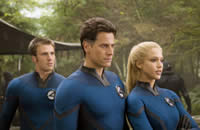 Apparently, what's more appropriate is writing down to the audience by relying on the usual funny banter and sight gags, with by-the-script Fantastic Four family squabbling. Hello, anybody notice Armageddon approaching yet? While Reed does the disco hustle at his bachelor party, and Johnny dons his Keebler-endorsed blue suit, whatever happened to a little suspense? Except for that brief planet explosion in the opening, more time is spent away from the impending doom than on it. I got it that being a celebrity is annoying, but hey, so is having your planet chewed on like rock candy while you're still standing on it.
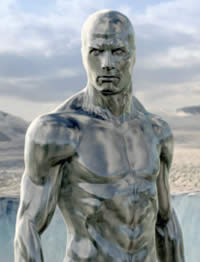
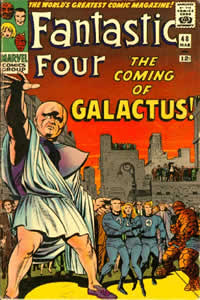 At this point, you're probably saying to yourself, man, a purple-dressed and toga-robed duo of giants would have been laughable on screen. Perhaps, but you bought everything else up till now, right? You're okay with a flaming man, an invisible woman, a rubber guy, and an orange rock pile with a head, not to mention the Alcoa Reynolds Wrap riding the sky on a silver surfboard without any swim trunks. At least their appearance in the film would have made the story more—ironically—human and visually interesting.
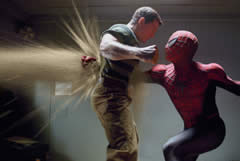 desperately keeps trying to steal the money needed for his dying daughter's treatment, but Spider-Man keeps getting in the way. Thomas Haden Church is perfect as the Sandman. His angular face, striped-shirted athletic build, and ability to convey the internal struggle with the regret for the decisions he's made add up to one of Spider-Man's strongest, yet more vulnerable foes.
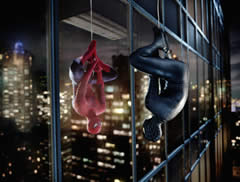 Raimi proves once again who's your Superhero Daddy. He and the special effects crew create a swirling, spiraling, exhilarating ballet of web-slinging aerial combat that sizzles across the screen. In between the slugfests, he captures the difficult relationship between Peter and Mary Jane, the growing relationship between Peter and Gwen Stacy, and the trade-offs of being everyone's hero.